How to Play on Arena
Every ZapCore has an Arena. Every hex on it is one of that ZapCore's ZapStacks, everything on it belongs to somebody — or is about to. This is where land changes hands.
This chapter is the Arena end to end: reading the board, the rules of taking ground, and every instrument on it.
The Arena
A hex grid where every hex is one of the ZapCore's ZapStacks. Everyone playing that ZapCore sees the same board — your hexes, their hexes, shared territory.
You do three things here: claim an empty hex by playing the ZapStack it's linked to, replay one you own to raise your score, or duel one somebody else owns to take it. Claiming and replaying live in this chapter; Duels get their own.
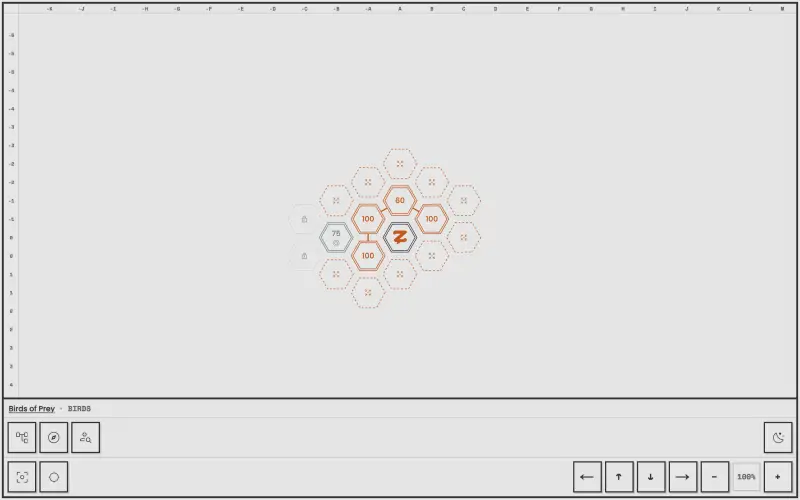
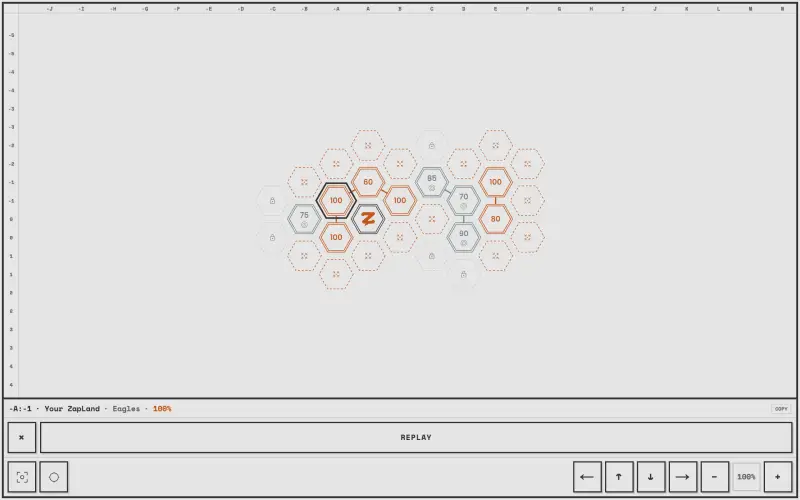
Below: a real contested Arena, read stop by stop.
Hexes & Charge
A hex you own is your ZapLand — six borders, every border a neighbor, and it carries Volts.
Your Charge — the percentage you answered right — is posted on the hex and defends it. Ten out of ten right? Charge 100. Six out of ten? Charge 60. That's the number a duelist has to beat to take the hex from you. It doesn't decay with time — it only moves when you replay it up, or lose the hex and stop caring.
Border rules
Expansion has rules. Your claims grow from ground that's already taken: your first hex lands next to the action, and after that, every claim has to touch one of your own.
Every Arena starts with an anchor — a single unowned hex in the middle. The first player builds beside it; everyone after builds along the borders. You're never locked out; you're just never random.
- 1Your first hex on an Arena: beside any existing land.
- 2After that: only beside your own land.
- 3Penned in, no open border left? Beside anything again.
Neighbor bonus
Each neighboring hex you also own adds 10% to a hex's Volts. Five neighbors: +50%. A full ring of six: the hex doubles.
The bonus recalculates whenever a border changes. Packed land is worth up to twice what scattered land is — growing from your own borders is the strategy, not just the rule.
In play
One game at a time per hex. While anyone is playing for a hex, it shows in play with a countdown, and nobody else can start on it.
The lock lasts about as long as the run it protects, then clears on its own — even if the player walks away mid-game.
That's the board and its laws. Now the moves — starting with the one that builds empires.
Claiming
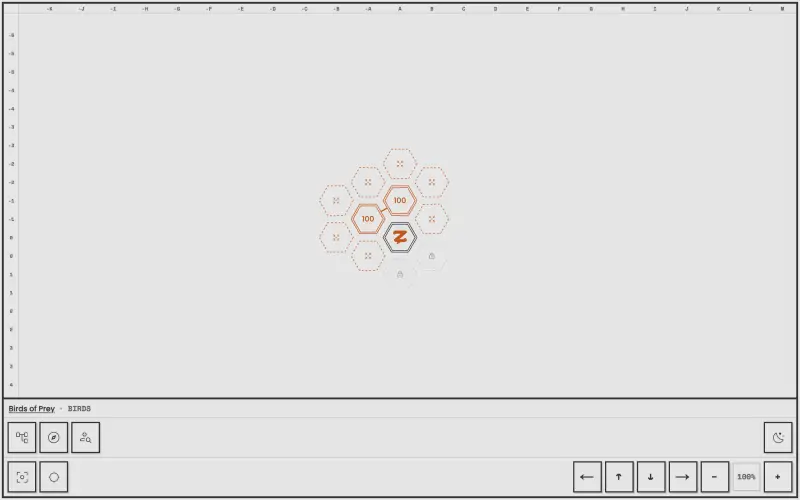
Pick a glowing hex. Play the ZapStack behind it. Finish with at least one correct answer and the hex is yours — with a Charge equal to your score. Get zero right and you walk away with nothing.
A weak claim still counts. A weak Charge is a welcome mat for anyone who plays better than you did. One real claim, first tap to planted flag:
Replay
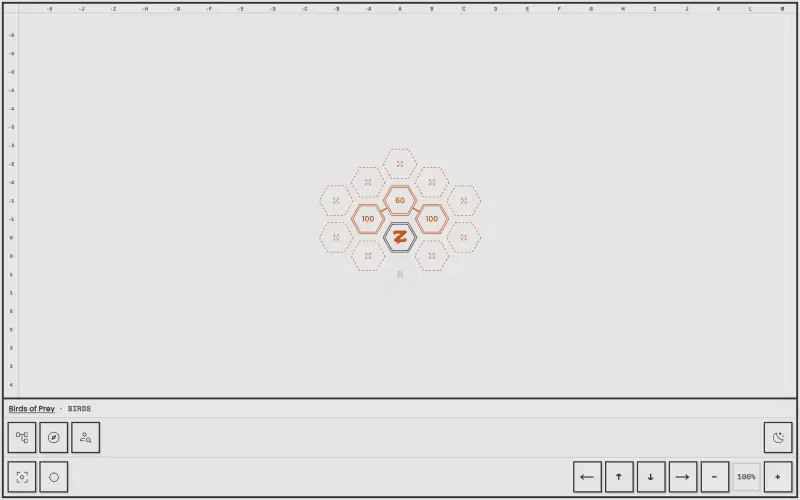
You own it. You can do better. Replay the ZapStack again — free, as often as you like — to raise its defense.
Only improvement counts: more right answers, or the same number faster, and the hex updates to the better run — Charge and Volts both. A worse run changes nothing. While you replay, the hex is locked — nobody can duel it mid-run. Here's one hex going 60 to 100:
The moves are yours. What's left are the instruments — the tools that make a big Arena feel small.
Find a player
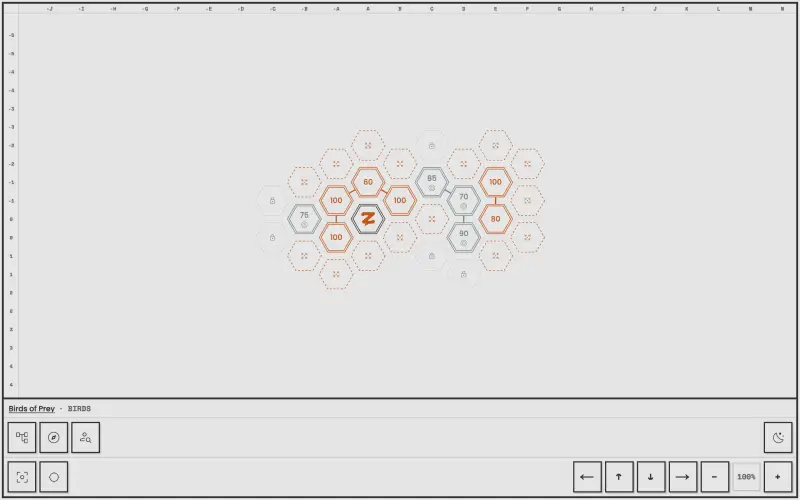
You know someone's out there. Tap the search button, type a name, and their entire territory lights up — every hex, every cluster, with a strip showing their stats.
Arrows cycle you through each of their clusters. One tap on × and the board fades back to normal.
Go to coordinates
Every hex has an address — a column letter and a row number, like a chessboard, printed on the rails at the edge of the board. The readout shows the address of anything you tap, one tap copies it.
Got an address from a rival, a friend, or the bell? The go-to instrument takes column and row and flies you straight there, with a pulse on the target so you can't miss it.
Getting around
Swipe, arrow keys, or the arrow buttons page you across the board sector by sector. Three zoom levels — 50% for the big picture, 100% for the fight, 200% for the detail. Below 100% the numbers hide; zoom back in and they return.
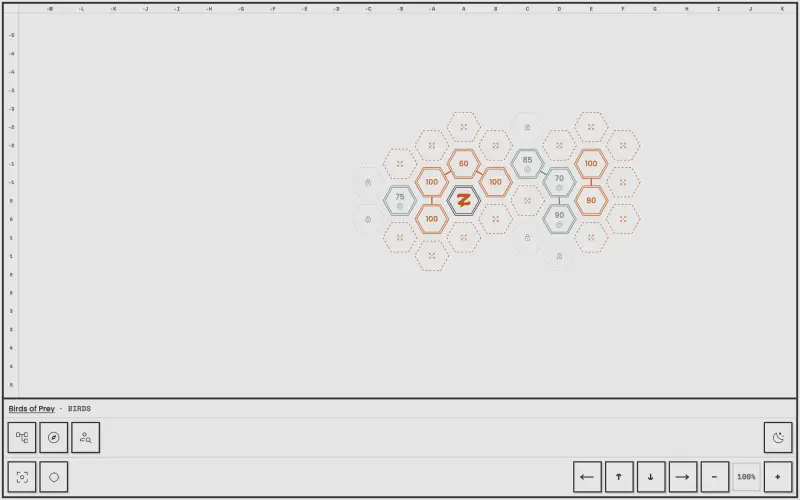
Two buttons always bring you home: back-to-start returns to where you entered, and the territory button flies to your own land — tap it again and it cycles through your clusters. The menu holds the way out: the ZapCore's page, the hierarchy above it, and your dashboard. And if a game is running, a Resume strip rides the bar until you finish it.
Board read, moves made, instruments in hand. Next: the challenge — taking ground that belongs to someone else.